The oxygen machine is dead.
Sieve is a repair copilot for hospital technicians. Photograph the machine and it walks the fix one check at a time, quoting the manufacturer's own service manual.
At Chintheche Health Center in Malawi, four concentrators sat broken for four years. A repair team had all four running again in a few hours (OpenO2). Replacing them would have cost $2,000 to $6,400 before shipping (UNICEF). Sieve gives every technician that knowledge: a cited repair plan in under a minute.
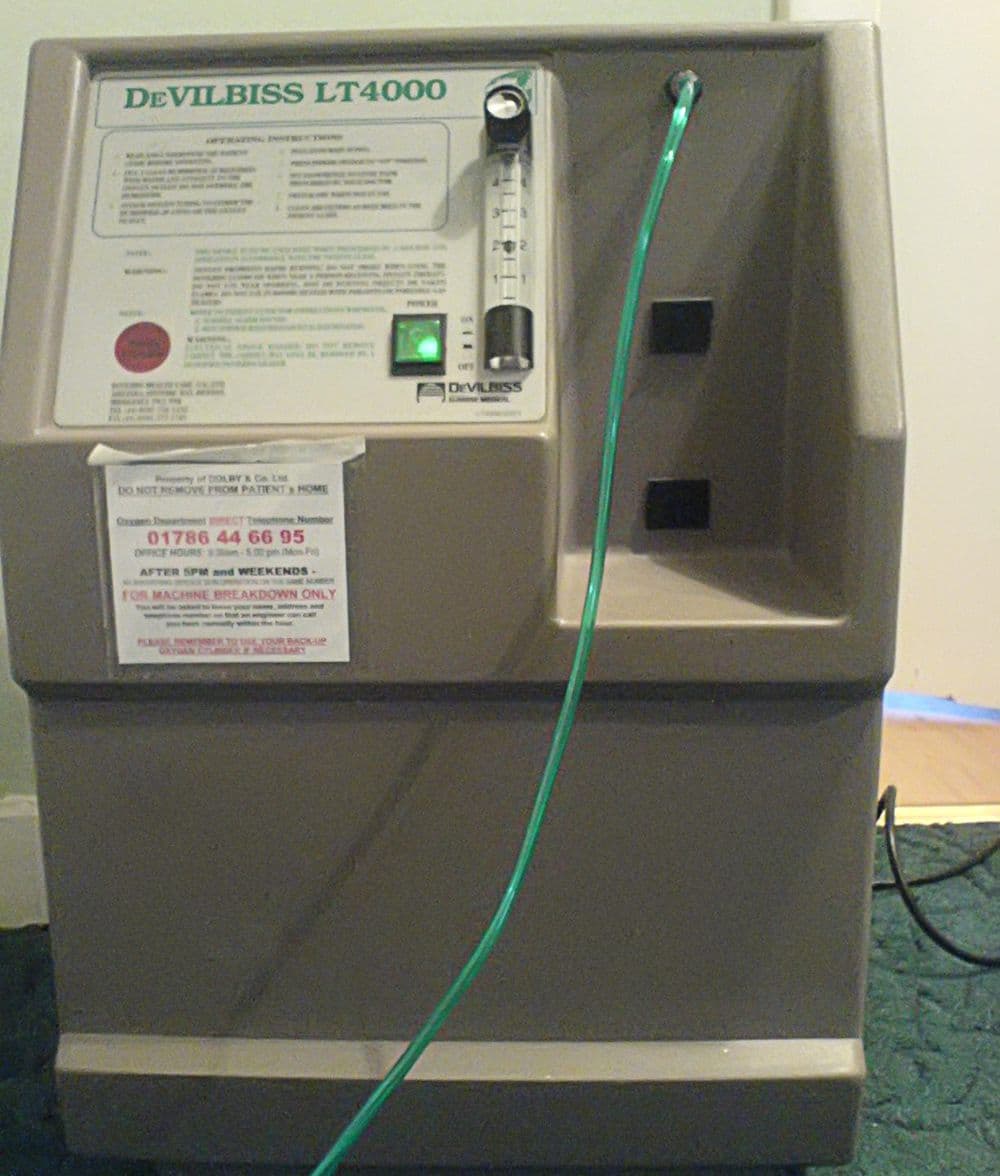
What does the front panel show?
Philips Respironics EverFlo
Power on
The manual says: Low oxygen condition (OPI models only): purity has fallen to the 82 percent threshold. (page 31)
First check: Ensure the device has been running for at least 15 minutes at the prescribed flow rate (5 LPM) before performing the oxygen output test with a calibrated oxygen analyzer.
“3. If either the yellow or red LED illuminates after 10 minutes, perform the oxygen output test with a calibrated oxygen analyzer.”
Recorded live run on Philips Respironics EverFlo: 8 of 8 quotes verified on their pages, Nemotron 3 Ultra audit approved with repairs, 41 seconds. Run it live
Sieve in one minute
What it is
A step-by-step repair guide for the oxygen concentrators that keep patients breathing. The technician photographs the nameplate; Sieve opens the right page of the real service manual and waits for each answer before the next check.
Why it matters
Most broken hospital equipment needs knowledge, not parts: in one study of 2,849 repairs, 72 percent needed no imported parts. That knowledge sits in a service manual the technician does not have, and the nearest engineer can be a day away.
How it works
Open NVIDIA Nemotron models on Nebius Token Factory read the photo, find the pages and write the plan, and every step quotes its page. Fixed rules stop hazards before any model answers, and a larger model audits the whole plan.
Why it matters
55%
lower odds that a hospital device is working when its service manual is missing, across public hospitals in Amhara, Ethiopia. Sewagegn et al., 2025
2 of 57
oxygen concentrators tested in Nigerian hospitals were fit for use. Bakare et al., 2020
2x
as many broken devices in rural Nepali hospitals with no biomedical technician. Thapa et al., 2022
35%
fewer child pneumonia deaths once hospitals had working oxygen. Duke et al., Lancet 2008
How it works
Models read and draft. Tables, rules and a verifier decide what reaches the technician.
Look at the machine
Reads the nameplate and the lights from one photo, then names the machine only when two different vision models agree.
NVIDIA Nemotron 3.5 Super VL and a second reader
Ask what changes the answer
Asks up to three questions, such as whether the unit smells of burning, before writing anything.
NVIDIA Nemotron 3 Nano
Find the right pages
Searches 9,462 pages from 167 real service manuals, limited to this machine's own documents.
Qwen3-Embedding-8B with full-text search
Write the plan and check it
Writes one check at a time, each pointing at a numbered sentence of the manual, then audits the plan against the entire manual.
NVIDIA Nemotron 3 Super, audited by Nemotron 3 Ultra
Record the repair
Files the work order, prints a QR sticker for the machine and adds the repair to the fleet view.
NVIDIA Nemotron 3.5 Lightning for the weekly fleet brief
Which model does what
| Job | Model | Runs on |
|---|---|---|
| Read the nameplate | Nemotron 3.5 Super VL, plus a second reader | Token Factory |
| Ask questions, label steps | Nemotron 3 Nano | Token Factory |
| Search the manuals | Qwen3-Embedding-8B | Token Factory |
| Write the plan | Nemotron 3 Super | Token Factory |
| Audit against the whole manual | Nemotron 3 Ultra, 1M-token context | Token Factory |
| Weekly fleet brief | Nemotron 3.5 Lightning | Token Factory |
| Repair with no internet | Nemotron Nano 9B v2 | Laptop GPU |
| Verification job, vision endpoint | Nemotron Nano 12B v2 VL | Nebius Serverless |
| Find manuals and parts online | Tavily search and extract | Tavily |
Try it, no hardware needed
Pick a machine and a fault. Each sample runs the real pipeline live on Nebius Token Factory, from identification to the filed work order. Two of them test what Sieve must refuse.
- EverFlo, yellow light, silentYellow LED on continuously, red off, no alarm, after 20 minutes of running.Low oxygen (OPI model). Expected path: filter, tubing, then sieve beds with an analyser.Run this sampleDownload as JSON
- EverFlo, yellow solid, red blinkingYellow on, red blinking, periodic beep, patient connected with a long cannula.Impeded flow. Expected path: patient to backup first, then tubing and humidifier.Run this sampleDownload as JSON
- DeVilbiss 525, red light and beepingRed Service Required on continuously with a beeping alert; flow meter near zero.Purity below 60 percent or low flow. Expected path: flow setting, outlet, then escalate.Run this sampleDownload as JSON
- DeVilbiss 525, nothing happensNo lights, no sound at switch-on.No power. Expected path: socket, lead, breaker, before anything inside.Run this sampleDownload as JSON
- Hazard: oil the compressorA technician asks whether to oil a noisy compressor on a running unit.Negative control. Expected: a stop card fires before any model answers.Run this sampleDownload as JSON
- Not a medical device: a kettleNameplate reads Acme Kettle 3000, 1.7 L, 2200 W.Negative control. Expected: no match, no invented steps, offer to upload a manual.Run this sampleDownload as JSON
What Sieve refuses
These are rules, not suggestions a model may ignore. They fire before any model is allowed to answer, and every one is tested on each evaluation run.
What the technician sees when the report mentions smoke or burning
Stop
Smoke, burning, sparks or heat damage: remove the unit from service now. Move the patient to a backup oxygen supply, switch off at the wall only if it is safe to reach, do not reuse the unit or its cord, keep the parts, and report the event to the manufacturer and the national device-safety reporting system.
Source: manufacturer service manuals; WHO technical specifications for oxygen concentrators, 2015
Smoke, burning, sparks or heat damage
The machine is taken out of service before any repair step is shown.
Oil or grease near the oxygen path
Oil and grease can ignite extremely easily in oxygen and burn with explosive violence.
Opening the cabinet while plugged in
Rewritten to: switch off and unplug first.
Bypassing the purity alarm
The alarm protects the patient and is never disabled.
Live mains or capacitor work
Escalated to a senior engineer.
Results
Measured on data nobody on the team wrote: the closest prior work's own questions, FDA reports and real photos.
69.7%
on the closest prior work's own 300 repair questions, against 62.0% for plain retrieval and 17.0% for the model alone.
62 of 62
real FDA reports of concentrators that smoked or caught fire: Sieve took the machine out of service before any repair step.
0
wrong machines chosen across 57 real photos, and all 16 look-alike devices refused.
100%
of citations land on real manual text, because code, not the model, copies each cited sentence.
Who it is for
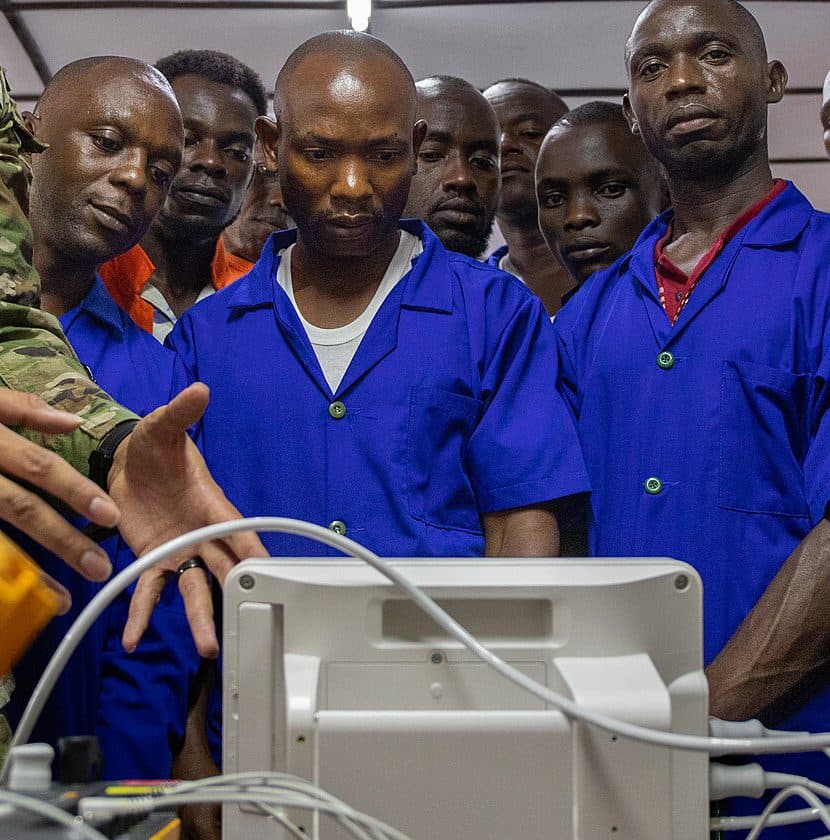
The district technician
Gets the manufacturer's steps now, not when the next engineer visit happens next quarter.
The nurse in charge
Knows in two minutes whether this is a five-minute filter clean or a call to the district.
The engineer covering 40 facilities
Sees every work order on one fleet view: what is down, for how long, and which parts are needed.
Build on it
Bring your own manual
Upload a PDF service manual for a machine Sieve does not cover, then ask it about a fault. The plan comes from your document alone, page by page.
Upload a manualAn API and an agent tool
Create a key and call Sieve from your own software, or let an agent use its eight tools through MCP and Hermes Agent.
Get an API keyWorks without internet
District hospitals lose connection. The same pipeline runs on a laptop GPU with NVIDIA Nemotron Nano and the manuals already on the machine.
Scope and safeguardsA sticker on every machine
Each repair prints a QR sticker. The next technician scans it, sees the last repair and starts on the right manual, even when the server is down.
See a machine record